
Bathroom Tile or Subfloor Feels Soft Underfoot? Why Water Damage Hides There
October 21, 2026
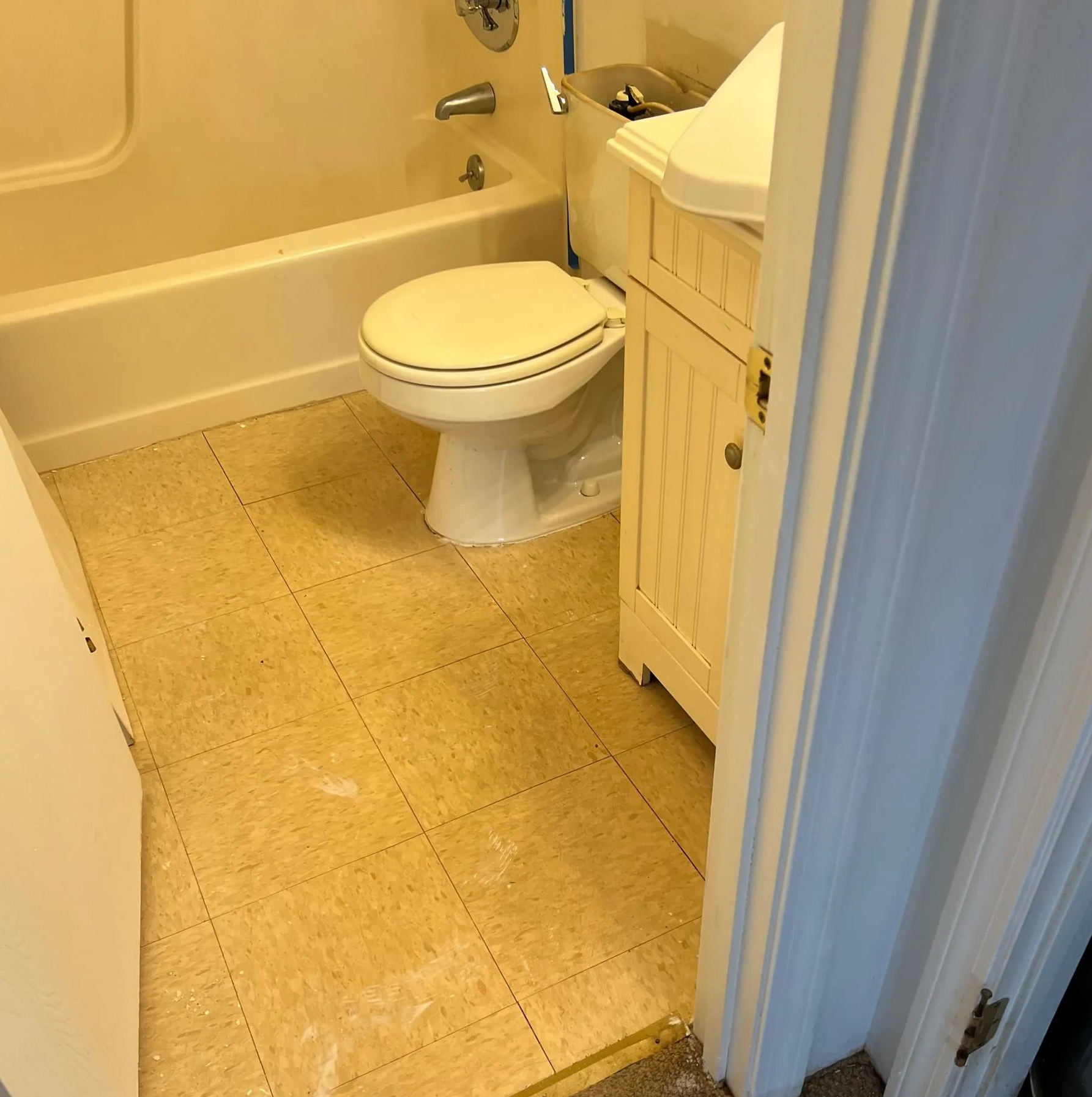
Quick Answer: A bathroom floor that feels soft, spongy, or slightly bouncy almost always means the wood underneath the tile has absorbed water over time. The leak is rarely where the soft spot is. It often starts at the toilet seal, the shower or tub edge, a supply line, or a damp wall, then travels along the framing before the floor finally gives. A soft floor does not heal on its own, and the tile surface can look perfect while the subfloor below it deteriorates. The sooner the source is found and the damaged wood is opened up and replaced, the smaller the repair stays.
You step out of the shower on a cold February morning and something feels off. The floor near the toilet gives a little under your heel, almost like walking on a thin rug over a mattress. You press down with your foot and it flexes. Maybe there is a faint musty smell you have been blaming on the damp towels, or a hairline crack in a tile that was fine last year. The surface looks clean and dry, so it is easy to tell yourself it is nothing.
It is rarely nothing. A bathroom floor is a layered system, and what you walk on is the thinnest, toughest layer of it. Under the tile sits a bed of mortar or backer board, and under that sits a plywood subfloor resting on joists. When that wood gets wet often enough, it loses stiffness long before anything shows on top. By the time you can feel the change underfoot, the water has usually been at work for months, sometimes longer.
That is why a soft bathroom floor deserves a real look instead of a shrug. Understanding where the water hides, and why it travels, makes it much easier to decide what needs to happen next.
Why the Floor Goes Soft Before the Tile Shows Anything
Wood carries load because its fibers are dry and stiff. Once the moisture content of a framing member or plywood panel stays high, generally above roughly 20 percent, decay fungi can begin to establish themselves. Those organisms feed on the wood itself. They do not need a flood to do it. A slow, repeated dampness is enough, and a bathroom supplies exactly that every single day.
Tile and grout are not waterproof as a system. Tile itself sheds water, but grout is porous and caulk joints age, so a small amount of moisture always finds its way through. In a properly built shower or bathroom floor, a waterproofing layer or membrane catches that water and sends it where it belongs. When that layer is missing, cut, or past its useful life, the water goes straight down into whatever sits below.
The wood does not fail all at once. It softens gradually, starting in the most saturated spot, and the stiffness that kept the tile flat and bonded fades with it. That loss of stiffness is what you feel as a bounce or a give. It is also what eventually cracks the tile above it, because tile and grout cannot flex without breaking.
The Usual Places the Water Comes From
Homeowners often look for the problem right where the floor feels soft. The source is frequently somewhere else, and knowing the common culprits saves a lot of guessing.
The toilet is the most frequent offender. A wax ring that has lost its seal, a flange that has cracked or corroded, or a toilet that rocks slightly every time someone sits down can all leak a little with every flush. That water seeps below the base where nobody can see it. A toilet that wobbles is worth fixing quickly, because the moisture trapped under the floor can weaken the subfloor within weeks and invite rot and mold.
The shower or tub edge is the second big one. Failing caulk at the tub line, loose or cracked grout in a shower floor, and a worn drain connection let water slip behind and below the surface. Because that water runs downhill along the framing, the soft spot you feel outside the tub may be several feet from the actual leak.
Supply lines and drains cause quieter trouble. A slow drip at a vanity valve, a weeping connection under a sink, or a pinhole in a pipe inside the floor cavity can keep a small area wet for a long time with no puddle ever forming. And in cold weather, condensation adds to the load. Warm, humid air from a hot shower meets a chilly exterior wall or an unheated space below, and moisture collects on cold surfaces where you will never see it.
Tip: Press firmly with your foot at several spots, starting near the toilet and then along the tub or shower edge, and notice where the give starts and stops. Mark those spots with painter's tape. When you describe the pattern to a pro, the shape of the soft area often points straight at the source, whether that is a ring around the toilet base or a strip along the tub.
Signs the Subfloor Is Telling You About
A soft feeling is the headline, but it usually arrives with supporting evidence. Look for a sagging or dipped area when you sight across the floor from a low angle. Listen for creaking or popping as you walk across the room. Notice any tile that has cracked, shifted, or sounds hollow when you tap it, and any grout that keeps crumbling in the same place no matter how often it is touched up.
Smell matters too. A persistent musty odor that does not go away after cleaning and ventilating usually means something organic is staying wet nearby. Stains, discoloration, or warped baseboards and trim along the bathroom wall add to the picture. So does paint that bubbles or peels on the ceiling of the room below, if the bathroom sits over a finished space.
One sign alone does not prove a rotted subfloor. A single hairline crack can come from nothing more than seasonal movement. But when a soft spot appears together with a musty smell, a failing caulk line, or a wobbly toilet, the odds shift quickly. That combination is the pattern that tells experienced installers to open the floor and look instead of waiting.
Why the Damage Hides So Well
The reason this problem catches so many homeowners off guard is that the wet layer is buried. Tile covers mortar or backer board. Mortar covers the subfloor. The subfloor sits above a joist bay that nobody ever looks into. Each layer hides the one under it, so the first visible clue is often the last stage of a long process.
Water also moves in unexpected directions. It follows the slope of the floor, runs along the underside of the plywood, wicks into the edges of joists, and settles wherever air does not circulate. A leak at the toilet can darken the subfloor along a whole wall. A shower leak can soak the plywood and the bottom of the wall framing at the same time. That is why the repair is rarely limited to the single square foot that feels soft.
The cosmetic fix, such as new tile, fresh caulk, or a self adhesive patch, hides the symptom without touching the cause. It may even make things worse by sealing wet wood under a new surface where it can never dry out.
What Cold New England Weather Adds to the Problem
Homes in southern New Hampshire and the Merrimack Valley put bathrooms through a hard cycle. Long winters mean bathrooms run on dry heat but also see heavy steam from hot showers meeting cold exterior walls. Summers bring real humidity, and a bathroom with weak ventilation holds that moisture for hours. Older homes in towns like Nashua, Manchester, and Haverhill often have bathrooms on exterior walls or over crawl spaces and unheated basements, which makes condensation a regular visitor.
Ventilation is the quiet factor. An exhaust fan that is undersized, clogged with lint, or venting into an attic instead of outdoors leaves steam to settle on every surface. Over a few winters, that steady dampness feeds mold on the ceiling and walls and keeps the floor edges damp. A fan that runs during the shower and for a while afterward does a surprising amount of protecting.
Freezing temperatures can also hurt in a different way. A supply line running through a cold exterior wall or floor cavity can crack when the temperature drops, and a small leak there may not announce itself until the floor above it has gone soft.
How Pros Find and Fix a Soft Bathroom Floor
A responsible repair starts with finding the source, not with the floor. That usually means checking the toilet seal and flange, inspecting the shower or tub surround and drain, looking at supply and drain connections, and checking how well the room ventilates. Moisture readings help separate old, dry damage from an active leak.
Once the cause is known, the damaged area gets opened up. Tile and its underlayment come off so the subfloor can be seen and probed directly. Plywood that is dark, crumbly, or soft to a screwdriver is cut out back to solid wood. If the joists have been affected, they get inspected and sistered or reinforced as needed. Healthy wood that is merely damp can often be dried and saved, which is why a careful inspection matters.
Then the floor is rebuilt in the correct order. New subfloor goes in flat and fastened tightly, backer board or a proper underlayment follows, and a waterproofing layer is placed where the room needs it. Only after all of that does the new tile, grout, and caulk go down. Done this way, the floor ends up stiffer and drier than the one you started with, and the source of the original leak is corrected so the same thing does not happen again.
Warning: Do not tile over a floor that already feels soft, and do not seal it with caulk or a topical coating to buy time. Covering wet, weakened wood traps moisture and lets decay spread beyond the original spot. It also leaves a hidden structural problem under your feet, especially around a heavy fixture like a toilet or tub.
What You Can Do Right Now
You do not have to rip anything up to be useful in the meantime. Check whether the toilet rocks and, if the base is loose, plan to have it addressed promptly. Look at the caulk along the tub and floor lines and note any gaps or dark spots. Run the exhaust fan during every shower and keep it running afterward, and confirm that it actually moves air by holding a tissue near it. Look under the vanity and around the toilet supply for any dampness, and check the ceiling below for stains.
Keep a short note of what you see and when. Dates, locations, and smells all help whoever inspects the room work out the source faster. And avoid heavy scrubbing, pressure, or standing water on the soft area until it has been evaluated.
Frequently Asked Questions
Why does my bathroom floor feel soft only near the toilet?
The toilet seal and flange sit directly above the subfloor, so a slow leak or a rocking toilet delivers water to one small area repeatedly. That spot loses stiffness first, which calls for checking the wood beneath.
Can a soft bathroom floor be fixed without replacing the tile?
Sometimes a small area can be repaired by removing only the tile above it and rebuilding from there, but the surrounding tile often cannot be saved because it is bonded to the layers being removed below.
Is a soft floor always a sign of rot?
Not always, but it is the first thing to rule out. A floor can also feel springy from undersized joists, thin subfloor, or loose underlayment. A musty smell or failing seal points toward moisture damage.
How long does it take for a leak to damage a bathroom subfloor?
It depends on how much water and how often. A steady leak can weaken the wood within weeks, while a tiny, intermittent one may take a year to show. The buried timeline is hard to judge.
Could mold be growing under my bathroom floor?
It is possible. Damp wood and trapped moisture are exactly what mold needs, and a lingering musty odor with no visible cause is a typical clue. Opening the floor is the reliable way to confirm it.
Will better ventilation alone fix a soft floor?
No. Good ventilation helps prevent the problem and slows any new damage, but it cannot restore wood that has already softened. Think of the exhaust fan as protection for the finished repair, not a replacement for it.
A Soft Floor Is Worth Looking Into Early
A soft bathroom floor feels minor and rarely is, yet it stays among the most fixable problems when caught before the damage reaches the framing. The flex underfoot is simply information about water that has found the wood below, and reading it early keeps the repair small. Finding the true source, whether a tired toilet seal, a failing caulk line, a hidden supply leak, or a ventilation gap, is what turns a worrying bounce back into a solid surface.
Flooring Plus LLC
has spent 20
years opening up floors like this across the Merrimack Valley, and the pattern holds true again and again: the wood softens quietly long before the tile shows a crack. Rebuilding the subfloor and tile in the right order, with the original leak corrected, is what makes a floor dependable through many more winters. From its base in Hollis, NH, the work comes down to one idea, that a floor should feel solid every single day.